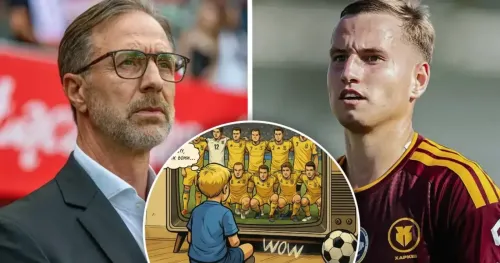


Serhiy Palkin: "Don't drag us into the Soviet Union"
The general director of Donetsk's "Shakhtar" Sergey Palkin commented on changes in the limit on foreign players.
"When arguments run out, prohibitions usually appear. This is the kind of discussion unfolding today around the future of Ukrainian football.
Over the past year, the Ukrainian Football Association has done a lot of, and what is especially important, truly valuable work to create conditions for Ukrainian players in European championships. In response, Ukraine opens up opportunities for players from EU countries to play in our championship without the status of foreigners. This is a bright example of progress, integration, and strategic decisions capable of changing the status quo.
The Executive Committee of the UAF has now adopted a balanced decision regarding the simultaneous presence on the field of three Ukrainian footballers, taking into account the special situation in our country. After all, due to certain restrictions, our players cannot yet fully find employment in Europe. We support the chosen direction and understand the need for gradual and balanced reform.
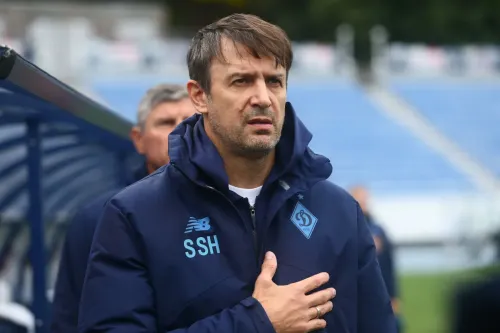
However, this approach has its opponents. A number of UPL clubs, led by "Dynamo," advocate for maintaining the current state of affairs without any changes and even without any hint of reforms.
Today, there is a discussion about the initiative to abolish the current rule according to which players with passports of EU countries are not considered foreigners in the Ukrainian championship.
Instead of seeking ways to increase the competitiveness of the championship, strengthen the positions of Ukrainian clubs in Europe, and create conditions for the development of players, we are offered to maintain the old model based on administrative restrictions. This involves returning to the previous format of the foreign player limit - no more than seven foreign players on the field at the same time - and abandoning the current European principle according to which players with citizenship of EU countries are not considered foreigners.
"Shakhtar" categorically opposes such a step.
Today, any decision that preserves the current system and hinders change means a step backward. This is a path to nowhere. This is a desire to return Ukrainian football to the past by rebuilding a closed system where artificial restrictions are proposed instead of open competition.
The main argument of the supporters of maintaining the previous limit is well known. They argue that such restrictions are necessary for the development of Ukrainian players and, as a result, for raising the level of the national team.
However, any such claim must be supported by practical results.
In the last five World Cups, starting from 2010, the Ukrainian national team has failed to qualify for the final tournament even once. At the same time, during this period, twenty-two different European national teams have participated in the World Cup at least once. If there was a direct connection between the existence of the foreign player limit and the success of the national team, it would inevitably manifest itself in sports results. However, the facts indicate the opposite: the system of restrictions that has been in place for many years has not produced the intended effect.
Today, Ukraine ranks only 25th in the UEFA club coefficient table. In this situation, the key issue should not be the defense of existing restrictions but the search for mechanisms that will allow Ukrainian football to re-enter the top ten strongest European associations. It is unlikely that the answer lies in creating new administrative barriers.
The history of world sports convincingly proves that competition is the main driver of development. It raises the level of the championship, accelerates the progress of players, forces academies to improve the training of young talents, raises the requirements for coaches and management, and makes the tournament more attractive to fans, broadcasters, investors, and sponsors. Artificial restrictions, on the other hand, only reduce the intensity of the competitive environment and occasionally become a source of long-term progress.
It is indicative that a similar position is held by the president of FC "Shakhtar" Rinat Akhmetov. After the rapid strengthening of "Paris Saint-Germain" thanks to massive investments, he was asked in an interview with The Guardian whether European football regulations should be changed to artificially limit the capabilities of the French club. He refused to support such an idea, emphasizing that development cannot be achieved by artificially weakening the strongest. The only way to succeed is to become stronger oneself and meet the highest standards of competition. This philosophy is of paramount importance for Ukrainian football today.
Unfortunately, the approach proposed today is based on the opposite logic. Instead of improving the quality of our work, we are offered to reduce the level of competition. Instead of improving academies, developing coaching methods, and increasing the efficiency of management, we are offered to maintain a system of restrictions that is supposed to compensate for our own shortcomings.
Such an approach is hard to call modern. It reflects the philosophy of administrative regulation, according to which development is achieved not by creating better conditions but by limiting the opportunities of other market participants.
Ukraine has already made its civilizational choice. This choice lies in European integration, open economy, fair competition, and a constant desire to raise its own level. Logically, these principles should also underlie the development of Ukrainian football.
Therefore, today's discussion concerns not only the regulation of competitions. It concerns the choice of the model for the development of Ukrainian football. Either we continue to move along the European path based on competition and openness, or we return to the philosophy of administrative restrictions, which has repeatedly demonstrated its ineffectiveness.
Either we timidly look back, nostalgic for the 70s-80s of the last century, or boldly change the rules and move towards a civilized world, towards an open and competitive football economy. We do not try to become stronger by weakening others but compete with the best and raise our own level.
If at the upcoming General Assembly of the UPL there will be attempts to cancel previously adopted correct decisions, "Shakhtar" reserves the right to challenge such actions in court.
Do not fear competition and do not drag Ukrainian football back to the Soviet Union."